Updated on October 17, 2026 · Our editorial process
Your eye is red, it waters, and it will not stop bothering you. Is it pink eye, or is it allergies? The two look alike at a glance, but they have different causes, one of them spreads to other people and the other does not, and the eye drops that fix one do nothing for the other. Getting it wrong means a week of the wrong treatment.
Here is the fastest way to tell them apart, the early signs of each, what to do for kids, and when red eyes need a doctor rather than a pharmacy.
Key takeaways
- Allergies usually hit both eyes at once and itch intensely. Pink eye usually starts in one eye and feels gritty or burning more than itchy.
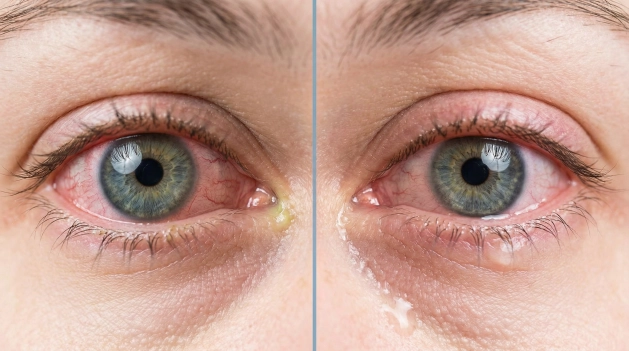
- Thick yellow or green discharge that glues the lashes shut points to bacterial pink eye. Watery discharge can be viral pink eye or allergies. Stringy, clear mucus with sneezing points to allergies.
- Viral and bacterial pink eye are contagious. Allergic eyes are not.
- Antihistamine drops help allergies and do nothing for infection. Antibiotic drops help bacterial pink eye and do nothing for viruses or allergies.
- Eye pain, light sensitivity, blurred vision, or symptoms in a contact lens wearer or a newborn need a doctor the same day.
Pink eye vs allergies at a glance
Both conditions are a form of conjunctivitis, which just means the thin clear layer over the white of the eye is inflamed. The difference is what inflamed it. Use this table first, then read the sections below for the detail.
| Sign | Eye allergies | Viral pink eye | Bacterial pink eye |
|---|---|---|---|
| Which eyes | Both at the same time | One first, often spreads to the other in a day or two | One first, can spread |
| Main feeling | Intense itching | Gritty, burning, like sand in the eye | Sore, sticky, irritated |
| Discharge | Clear, watery, sometimes stringy | Watery | Thick yellow or green, crusts overnight |
| Eyelids | Puffy and swollen | Mildly swollen | Stuck together in the morning |
| Other symptoms | Sneezing, runny or itchy nose, itchy throat | Often a cold, sore throat, or swollen gland in front of the ear | Sometimes an ear infection in children |
| Timing | Comes and goes with pollen, pets, or dust | Any time, often after a cold | Any time |
| Contagious | No | Yes, very | Yes |
| How long | As long as the trigger is around | 1 to 2 weeks, sometimes 3 | A few days with drops, up to 2 weeks without |
Two questions settle most cases. Did it start in both eyes at once, and is itching the main complaint? If yes to both, it is almost always allergies. If it started in one eye, feels gritty rather than itchy, and you have or recently had a cold, it is almost always viral pink eye. Thick colored discharge every morning means bacterial pink eye until proven otherwise.
What eye allergies look like
Allergic conjunctivitis is your immune system overreacting to something harmless, most often pollen, pet dander, dust mites, or mold. When the allergen lands on the eye, cells in the conjunctiva release histamine, and histamine is what makes the eye itch, water, and swell. Because allergens land on both eyes, both react together.
The giveaways are itching that makes you want to rub constantly, puffy lids, watering, and a clear stringy mucus you might notice in the corner of the eye. Most people also have the nose symptoms of hay fever at the same time. Symptoms follow the trigger. Spring and fall for tree, grass, and weed pollen, all year round for dust mites and pets, or within minutes of visiting a house with a cat. The NHS notes that allergic conjunctivitis is not infectious, so there is nothing to catch and nothing to keep children home from school for.
Rubbing makes it worse. It releases more histamine, and it can scratch the surface of the eye or introduce bacteria, which is how an allergy episode occasionally turns into a real infection.
What pink eye looks like
When people say pink eye, they usually mean infectious conjunctivitis, caused by a virus or bacteria. The National Eye Institute describes it as one of the most common eye problems in both children and adults.
Viral pink eye
This is the most common kind, and it usually comes from the same adenoviruses that cause colds. It often starts a few days into a cold or sore throat, in one eye, with watering, redness, a gritty or burning feeling, and mild crusting in the morning. It frequently spreads to the second eye within a couple of days. It is very contagious through hands, towels, and pillowcases, and there is no cure. It clears on its own in one to two weeks, occasionally three. Antibiotics do nothing for it.
Bacterial pink eye
Bacterial infection produces the thick yellow or green discharge that pink eye is famous for. The lashes are often matted shut when you wake up, and the eye feels sore and sticky rather than itchy. It is more common in children than adults. Antibiotic drops or ointment shorten it to a few days and reduce the time you are contagious, though mild cases often clear without them.
Early stage pink eye symptoms
Many searches ask what pink eye looks like in the first day, before the obvious discharge. Early signs are a pink tinge to the white of one eye, a feeling that something is in the eye, watering, mild sensitivity to light, and a little crust at the lashes in the morning. If you or your child had a cold in the past week, assume it is viral and start the hygiene steps below right away, because that first day or two is when it spreads most easily.
Pink eye vs allergies in kids and toddlers
Young children cannot tell you whether their eye itches or burns, so parents have to read the other clues. The American Academy of Ophthalmology has a useful overview of conjunctivitis in children and adults. In practice:
- Both eyes red, rubbing constantly, sneezing, clear runny nose, worse outdoors: almost certainly allergies. Common from about age 3 onward and often runs in families.
- One goopy eye, crusted shut in the morning, after a cold or alongside an ear infection: bacterial pink eye. This is the most common type in toddlers and preschoolers.
- One or both watery red eyes with a cold, a cough, or a fever: viral pink eye.
- A newborn with red, swollen, or discharging eyes: see a doctor the same day. Eye infections in the first month can be serious.
On school and daycare: allergic eyes never need to stay home. For infectious pink eye, policies vary. Many schools ask that a child with bacterial pink eye has had 24 hours of antibiotic drops before returning, and that a child with viral pink eye stays home while the eye is actively watering and crusting. Check your school's rule, and in the meantime teach the one habit that matters most, which is keeping hands away from the face and washing them often.
How to treat each one
Eye allergies
- Antihistamine and mast cell stabilizer eye drops. Ketotifen and olopatadine are sold over the counter in the US and work within minutes. Use them daily through the season rather than only when the eyes flare.
- Oral antihistamines such as cetirizine or loratadine help when the nose is involved too, though they can dry the eyes a little.
- Cold compresses and artificial tears calm itching and rinse pollen off the surface of the eye.
- Cut exposure. Keep windows closed on high pollen days, shower and change after being outside, wash bedding hot, and keep pets out of the bedroom.
- Skip redness-relief drops with naphazoline or tetrahydrozoline for more than a few days. They cause rebound redness.
Viral pink eye
There is no medicine that clears it faster. Cool compresses, preservative-free artificial tears, and time are the treatment. Antibiotic drops do not help and are a common reason people wrongly think they are "immune" to antibiotics later. Wash hands often, use a fresh towel and pillowcase each day, throw away eye makeup you used while infected, and stay out of swimming pools until it has cleared.
Bacterial pink eye
A doctor or, in some states, a pharmacist can prescribe antibiotic drops or ointment. Symptoms usually improve within two to three days. Finish the course. Wipe crusts away with a clean cotton pad soaked in cooled boiled water, from the inner corner outward, using a new pad for each eye.
Contact lens wearers
Take the lenses out at the first sign of a red eye and switch to glasses until it is fully better. Throw away the lenses and the case you were using. Red eye in a contact lens wearer can occasionally be a corneal infection, which can damage sight quickly, so if there is any pain or blurred vision, see an eye doctor the same day rather than waiting it out.
When to see a doctor
Most red eyes are harmless and settle within a week or two. See a doctor promptly, the same day if possible, if you have any of the following, because they can point to something more serious than conjunctivitis:
- Moderate or severe eye pain, rather than irritation
- Sensitivity to light that makes you squint or close the eye
- Blurred vision that does not clear when you blink the discharge away
- Intense redness, or redness that is mostly in a ring around the colored part of the eye
- Symptoms in a newborn, in a contact lens wearer, or in someone with a weakened immune system
- Thick discharge that is getting worse after two days of antibiotic drops
- Symptoms lasting more than two weeks
A doctor can usually tell allergy from infection by looking, and can check that the cornea is not involved.
Can allergies turn into pink eye?
Allergic conjunctivitis is, strictly speaking, a type of pink eye, which is where a lot of the confusion starts. But allergies do not turn into an infection on their own. What happens is that constant rubbing breaks down the eye's surface defenses and carries bacteria from the hands into the eye, and a bacterial infection sets up on top of the allergy. If an itchy, watery allergic eye suddenly produces thick yellow discharge, treat it as bacterial pink eye and see a doctor for drops.
The bottom line
Allergies itch, affect both eyes together, come with sneezing, and are not contagious. Pink eye starts in one eye, feels gritty or sticky, often follows a cold or produces colored discharge, and spreads easily. Match the treatment to the cause: antihistamine drops for allergies, patience and hygiene for viral pink eye, antibiotic drops for bacterial pink eye. And if there is real pain, light sensitivity, or blurred vision, stop guessing and get the eye looked at.
Frequently asked questions
How do I know if I have pink eye or allergies?
Check two things. Allergies almost always affect both eyes at the same time and the main complaint is intense itching, usually with sneezing or a runny nose. Pink eye usually starts in one eye, feels gritty or sticky rather than itchy, and often follows a cold or produces thick yellow or green discharge. If you are still unsure, a doctor can tell by examining the eye.
Can allergies cause pink eye?
Allergic conjunctivitis is technically a form of pink eye, but it is not an infection and it is not contagious. Allergies do not turn into infectious pink eye by themselves. Heavy rubbing can carry bacteria into the eye, though, and a bacterial infection can develop on top of the allergy.
Is pink eye contagious?
Viral and bacterial pink eye are both contagious, spread by hands, towels, pillowcases, and eye makeup. Viral pink eye is especially easy to pass on and can spread for as long as the eye is watering. Allergic conjunctivitis is not contagious at all.
What does pink eye discharge look like compared with allergies?
Bacterial pink eye produces thick yellow or green discharge that crusts the lashes together overnight. Viral pink eye produces watery discharge with light crusting. Allergies produce clear, watery, sometimes stringy mucus and never the thick colored discharge of a bacterial infection.
What are the early stage symptoms of pink eye?
A pink tinge to the white of one eye, watering, a gritty feeling as if something is in the eye, mild light sensitivity, and a little crusting at the lashes in the morning. If you had a cold in the past week, it is most likely viral. This early stage is when it spreads most easily, so start hand washing and separate towels straight away.
How long does pink eye last compared with allergies?
Viral pink eye lasts one to two weeks, occasionally three. Bacterial pink eye improves within two to three days of antibiotic drops and clears within about a week. Allergy symptoms last as long as the trigger is around, which can mean the whole pollen season unless you use antihistamine drops and reduce exposure.
Should I use antihistamine eye drops for pink eye?
No. Antihistamine drops block the histamine that causes allergic itching. They do nothing for a virus or bacteria. Viral pink eye needs time, cool compresses, and artificial tears. Bacterial pink eye needs antibiotic drops. Using the wrong drops delays the right treatment.
Can my child go to school with pink eye or allergies?
With allergies, yes, there is nothing to catch. With infectious pink eye, rules vary by school. Many ask for 24 hours of antibiotic drops for bacterial pink eye before returning, and ask children with viral pink eye to stay home while the eye is actively watering and crusting. Check your school's policy and keep up hand washing either way.