Updated on October 17, 2026 · Our editorial process
Laser eye surgery is one of the few operations people choose for convenience rather than need, which is why the first question is almost always the price. The short version: in the United States in 2026, expect to pay somewhere between $2,000 and $3,000 per eye for LASIK, with PRK a little less and SMILE a little more. The longer version, including what that price does and does not cover, how it compares with a lifetime of contact lenses, who should not have it, and what can go wrong, is below.
Key takeaways
- LASIK costs about $2,000 to $3,000 per eye in the US, or $4,000 to $6,000 for both. PRK is usually a few hundred dollars less per eye and SMILE a few hundred more.
- The quote should include the screening, the surgery, follow-up visits for at least a year, and the clinic's policy on touch-ups. Cheap advertised prices often leave those out.
- Insurance almost never pays, but FSA and HSA accounts can, and many clinics offer interest-free financing.
- More than 9 in 10 patients end up with 20/20 vision or better and satisfaction rates in large reviews are above 95 percent. Dry eye and night glare are the common side effects, and both usually settle within months.
- You need stable vision, thick enough corneas, healthy eyes, and realistic expectations. Reading glasses after 45 are normal aging, not a failed surgery.
How much does laser eye surgery cost in 2026?
Prices are quoted per eye, and almost everyone has both done in the same session. The ranges below reflect US clinic pricing in 2026. The Refractive Surgery Council's survey of US practices put the average LASIK fee at a little over $2,200 per eye, and current clinic price guides cluster between $2,000 and $3,000 once modern all-laser technology is included.
| Procedure | Typical cost per eye, US | Both eyes | Notes |
|---|---|---|---|
| LASIK, all-laser or wavefront-guided | $2,000 to $3,000 | $4,000 to $6,000 | The most common procedure. Older blade-based LASIK is cheaper but less used. |
| PRK or LASEK | $1,800 to $2,800 | $3,600 to $5,600 | No flap. Often chosen for thin corneas or contact sports. Slower recovery. |
| SMILE | $2,300 to $3,500 | $4,600 to $7,000 | Newer, keyhole technique. Treats nearsightedness and astigmatism only. |
| Touch-up or enhancement | $0 to $1,500 | Often free within one to two years if the clinic includes it. Ask. |
What changes the price
- Technology. Bladeless, wavefront-guided, and topography-guided systems add roughly $300 to $700 per eye over basic LASIK. They map your cornea in more detail, which can mean fewer night-vision problems.
- Where you live. Clinics in big coastal cities charge the most. The Midwest and South tend to run lower.
- The surgeon. Experienced surgeons with their own practices charge more than high-volume chains. That is not always a bad trade, but ask how many procedures the person operating on you has done.
- Your prescription. Higher prescriptions and astigmatism sometimes cost more because they need more advanced correction.
- What is bundled. This is the one that matters most, so it gets its own section.
What the price should include
A price advertised at $999 per eye is rarely what you pay. Those offers usually apply to the smallest prescriptions on older equipment, and they exclude parts of the care you will need. Before you compare two clinics, make sure each quote covers the same things:
- The full pre-operative evaluation, including corneal mapping and thickness measurement
- The procedure itself on the technology you were quoted, not a lower tier
- All follow-up visits for at least 12 months
- Prescription eye drops after surgery, or a clear statement that they are extra
- The enhancement policy: whether a touch-up within one or two years is free, discounted, or full price
Ask for the total in writing. A clinic that will not put the full figure on paper is telling you something.
Laser eye surgery vs glasses and contacts over time
Laser surgery is a large one-time cost. Contact lenses are a small cost that never stops. Daily disposable lenses, solution, and the yearly exam typically run $500 to $900 a year in the US. Over ten years that is $5,000 to $9,000, which is more than most people pay for LASIK on both eyes. Glasses are cheaper, perhaps $200 to $500 every two or three years, so the surgery takes longer to pay for itself against glasses alone. The comparison only works if the correction lasts, which for most people it does, with the exception of reading glasses after 45 that everyone needs regardless.
Insurance, FSA and HSA, and financing
Health insurers in the US treat laser vision correction as elective, so standard medical plans and Medicare do not cover it. Three things do help:
- Vision plan discounts. Many vision plans have negotiated 15 to 20 percent off at partner clinics. Check before you book.
- FSA and HSA accounts. Laser eye surgery is an eligible expense, so you can pay with pre-tax dollars. For someone in a 24 percent tax bracket, that is the same as a 24 percent discount. FSA funds usually have to be used within the plan year, so time the surgery accordingly.
- Clinic financing. Most clinics offer payment plans, often interest-free for 12 to 24 months through medical credit providers. Read the terms, because deferred-interest plans charge the full back interest if any balance remains at the end.
The main types of laser eye surgery
LASIK
The surgeon makes a thin flap in the front of the cornea, folds it back, reshapes the tissue underneath with a laser, and lays the flap back down, where it seals itself within minutes. Vision is usually clear by the next morning and most people are back at work in a day or two. According to the American Academy of Ophthalmology, LASIK treats nearsightedness, farsightedness, and astigmatism and remains the most common refractive procedure.
PRK and LASEK
No flap. The surgeon removes or loosens the thin outer skin of the cornea, reshapes the surface with the same laser, and lets the skin regrow over a few days under a bandage contact lens. Recovery is slower and more uncomfortable, usually three to five days before vision is useful and a few weeks before it is fully sharp, but there is no flap to worry about. That makes PRK the usual choice for thin corneas, people in contact sports or the military, and anyone with a job where an eye injury is a real risk. Long-term results match LASIK.
SMILE
Small incision lenticule extraction. A laser cuts a thin disc of tissue inside the cornea, and the surgeon removes it through an opening a few millimeters wide. No flap, a smaller wound than LASIK, and some evidence of less dry eye in the first months. The FDA first approved it in 2016. It is currently used for nearsightedness and astigmatism, not farsightedness, and fewer surgeons offer it, which is part of why it costs more.
| Procedure | Flap | Useful vision | Best suited to |
|---|---|---|---|
| LASIK | Yes | Next day | Most prescriptions, fastest recovery |
| PRK or LASEK | No | 3 to 5 days | Thin corneas, contact sports, high-risk jobs |
| SMILE | No, small opening | 1 to 3 days | Nearsightedness with or without astigmatism, dry-eye-prone eyes |
Is laser eye surgery safe?
Honestly, yes, for the right candidate, and the numbers are better than most people expect. A review of the world literature on LASIK published in Ophthalmology found a patient satisfaction rate of 95.4 percent, and later large studies report more than 9 in 10 patients reaching 20/20 vision or better, with almost all reaching 20/40, the legal driving standard in most states. Serious, sight-threatening complications are rare. That said, it is surgery on a healthy eye, and side effects are common enough that you should expect some.
Common and usually temporary
- Dry eyes. The most common complaint. Most people need lubricating drops for weeks to months, and it usually settles by six months. People who already have dry eye can be made worse, which is why screening matters.
- Glare, halos, and starbursts at night. Common in the first weeks, especially around headlights. They fade for most people as the cornea heals, though a small number notice them long term.
- Fluctuating vision and light sensitivity in the first days to weeks.
Less common
- Under- or over-correction. Vision is improved but not fully. A touch-up procedure fixes most cases once the eye has stabilized, usually after three to six months.
- Regression. Some of the correction drifts back over years, more often with high prescriptions.
- Flap problems with LASIK, such as wrinkles or debris under the flap, which are rare and usually fixable early.
- Infection or inflammation, which is uncommon with proper after-care but is the reason the follow-up visits are not optional.
- Corneal ectasia. A rare weakening and bulging of the cornea, mostly in people whose corneas were too thin or irregular to begin with. Modern screening exists largely to rule this out.
Who is a good candidate, and who is not
The Academy's checklist is short. You should be at least 18, and ideally over 21, with a prescription that has not changed meaningfully in a year. Your corneas need to be thick and regular enough to reshape safely. Your eyes should be otherwise healthy, and your expectations realistic.
You are likely to be turned down, or steered to a different procedure, if you have severe dry eye, very thin corneas, keratoconus or other corneal disease, a cataract that affects vision, advanced glaucoma, poorly controlled diabetes, an autoimmune condition that slows healing, or a very high prescription. Pregnancy and breastfeeding temporarily change the eye and are a reason to wait. A good clinic turns away a meaningful share of the people who come in for screening. If one tells you everyone qualifies, go elsewhere.
How long does laser eye surgery last?
The reshaping of the cornea is permanent. What changes is the rest of your eye. From the mid-40s on, the lens inside the eye stiffens and near vision blurs. This is presbyopia, it happens to everyone, and it is why most people who had LASIK in their 20s or 30s need reading glasses later. It is normal aging, not a failed operation. Some surgeons offer monovision, correcting one eye for distance and one for near, to delay that, which suits some people and annoys others. Separately, a small percentage of patients, estimated at a few percent over ten years, need an enhancement because their prescription drifted. Long-term follow-up studies find the large majority still seeing well a decade on.
What the procedure and recovery are like
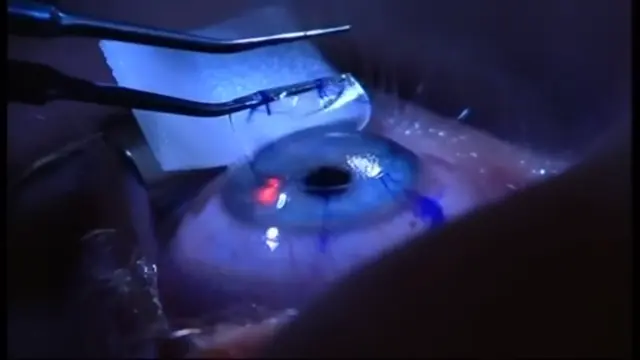
The whole visit takes an hour or two. The laser itself works for well under a minute per eye, and you are in the room for about 10 to 15 minutes per eye. Your eye is numbed with drops, a holder keeps you from blinking, and you feel pressure rather than pain. You cannot drive home. For the first day expect scratchy, watery, light-sensitive eyes and a strong urge to rub them, which you must not do. After LASIK most people see well the next morning and return to desk work in one to two days. After PRK, plan for three to five days off and a few weeks of gradually sharpening vision. No swimming, eye makeup, or contact sports for a few weeks, and keep every follow-up appointment.
Questions to ask before you pay
- What is the total price for both eyes, in writing, and what does it include?
- Which laser platform will be used, and is it the one in the quote?
- How many of these procedures has this surgeon personally done?
- What is your enhancement policy, and for how long?
- What percentage of your patients are not candidates after screening?
- Who do I call if something is wrong at 10 pm on a Saturday?
The bottom line
In 2026, laser eye surgery costs roughly $2,000 to $3,000 per eye for LASIK in the US, less for PRK and more for SMILE, and the honest total for both eyes is usually $4,000 to $6,000. It is elective, so insurance will not pay, but FSA and HSA money and financing help. The results are good for the right candidate, with satisfaction above 95 percent, and the risks are mostly temporary dry eye and night glare. The money is best spent on a thorough screening and an experienced surgeon rather than on the lowest advertised price.
Frequently asked questions
How much is laser eye surgery in the US?
In 2026, LASIK typically costs $2,000 to $3,000 per eye, or $4,000 to $6,000 for both eyes, with the national average a little over $2,200 per eye. PRK usually costs a few hundred dollars less per eye and SMILE a few hundred more. Advertised prices under $1,000 per eye generally apply only to small prescriptions on older equipment and exclude follow-up care.
Does insurance cover laser eye surgery?
Almost never. US medical insurance and Medicare treat it as elective. Many vision plans offer 15 to 20 percent discounts at partner clinics, and you can pay with pre-tax FSA or HSA funds, which is worth a discount equal to your tax rate. Most clinics also offer interest-free financing over 12 to 24 months.
Is laser eye surgery safe?
For a properly screened candidate, yes. Large reviews report satisfaction above 95 percent and more than 9 in 10 patients reaching 20/20 vision. The common side effects are dry eye and night glare, which usually settle within months. Serious complications such as infection or corneal weakening are rare, and careful screening is what keeps them rare.
How long does laser eye surgery last?
The change to the cornea is permanent. Most people see well for decades. From the mid-40s, near vision blurs for everyone because of normal aging of the lens, so reading glasses later are expected, not a sign the surgery failed. A few percent of patients need a touch-up within ten years because their prescription drifted.
Which is better, LASIK, PRK, or SMILE?
They give similar results at one year. LASIK recovers fastest. PRK avoids a corneal flap, which suits thin corneas, contact sports, and high-risk jobs, but takes longer to heal. SMILE is a newer keyhole technique for nearsightedness and astigmatism with a smaller wound and possibly less early dry eye, but fewer surgeons offer it and it costs more. Your corneal measurements and lifestyle usually decide it.
Can laser eye surgery fix astigmatism?
Yes. LASIK, PRK, and SMILE all treat regular astigmatism, usually alongside nearsightedness or farsightedness. Very high or irregular astigmatism may need a different approach, which the screening will show.
How long does the procedure take?
The laser works for less than a minute per eye and you are in the procedure room for about 10 to 15 minutes per eye. The whole visit, including preparation and recovery, takes one to two hours. You will need someone to drive you home.
Who should not have laser eye surgery?
People under 18, anyone whose prescription is still changing, and people with severe dry eye, thin or irregular corneas, keratoconus, a vision-affecting cataract, advanced glaucoma, poorly controlled diabetes, or autoimmune conditions that slow healing. Pregnancy and breastfeeding are reasons to wait. A thorough screening is designed to find these issues before surgery.