The spleen is one of those organs most people never think about — until something goes wrong. Sitting quietly on the left side of your body beneath your rib cage, it works around the clock filtering your blood and protecting your immune system.
Despite being roughly the size of your fist, it handles a remarkable workload every day. Below you will learn what the spleen is, exactly where it sits in the body, what it does, and how your daily habits directly affect its health.
What is the Spleen?
The spleen is a soft, dark-purple organ that serves two body systems simultaneously — the lymphatic system and the circulatory system. This dual role makes it one of the most versatile organs in the human body and one of the least understood.
It acts as your body's blood quality control centre, continuously scanning the bloodstream for damaged red blood cells, foreign bacteria, and cellular waste. Anything that does not belong gets identified and cleared out.
Where is the Spleen Located?
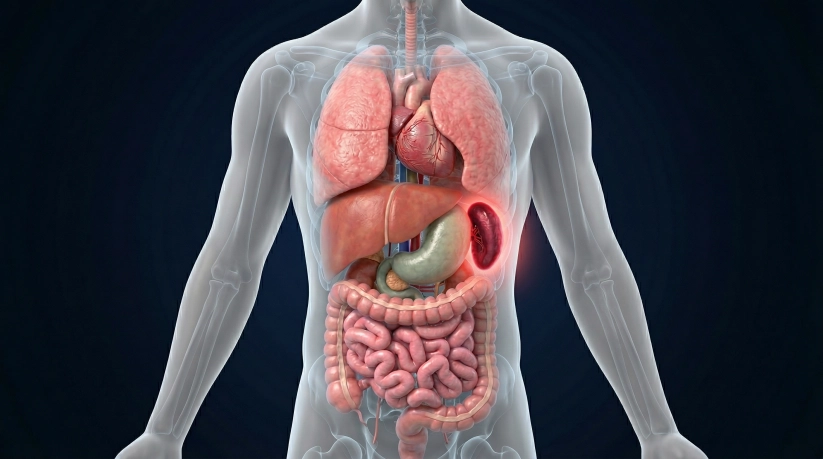
The spleen sits in the upper left part of your abdomen, tucked just beneath the left side of your rib cage. It rests directly behind your stomach and alongside your left kidney. The lower ribs act as a partial shield against everyday physical impact.
Under normal conditions you cannot feel the spleen from outside the body. When it becomes enlarged due to infection or illness it may press on surrounding organs and create noticeable discomfort or an unusual sense of fullness even after eating very little.
Key Functions of the Spleen
The spleen performs four critical jobs that keep your body working in balance every single day:
Blood filtration
Removes old, damaged, or abnormal red blood cells from the bloodstream continuously every hour.
Immune defence
Produces white blood cells and antibodies to identify and fight invading bacteria and viruses.
Blood storage
Stores a reserve of red blood cells and platelets, releasing them quickly during sudden blood loss.
Iron recycling
Extracts iron from worn-out red blood cells so the body can reuse it to produce healthy new ones.
No other single organ serves both the circulatory and lymphatic systems at the same time. This is exactly what makes the spleen so difficult to fully replace when it is removed or severely damaged.
Signs of an Unhealthy Spleen
A healthy spleen works silently — you will rarely notice it is there. But when something goes wrong these are the most common warning signals your body produces.
Enlarged spleen
An enlarged spleen — called splenomegaly — causes persistent fullness or pain in the upper left abdomen, especially noticeable after small meals. Common causes include viral infections like mononucleosis, liver disease, and blood disorders. An ultrasound scan confirms whether the spleen is larger than normal.
Fatigue and anaemia
When the spleen destroys too many red blood cells — a condition called hypersplenism — anaemia develops. This produces ongoing tiredness, physical weakness, and visibly pale skin. A standard blood count test can detect this early before it becomes severe.
Frequent infections
A poorly functioning spleen produces fewer immune cells and antibodies. This leaves the body significantly more vulnerable to bacterial infections. According to MedlinePlus , the spleen plays a key role in fighting certain bacterial infections. This is why people without a spleen need extra vaccinations to stay protected.
How Diet Affects Spleen Health
What you eat has a direct impact on how well your spleen functions day to day. The spleen is involved in blood production and immune defence — both of which depend heavily on the nutrients your body receives through food.
Foods rich in iron, antioxidants, and anti-inflammatory compounds actively support spleen function. If you want to know exactly which foods help the most, read our detailed guide on best foods for spleen health.
Processed foods, excess sugar, and alcohol increase internal inflammation and put unnecessary stress on the spleen and surrounding organs. Staying hydrated, limiting alcohol, and eating plenty of leafy greens are three simple daily habits that protect long-term spleen health.