Updated on October 29, 2026 · Our editorial process
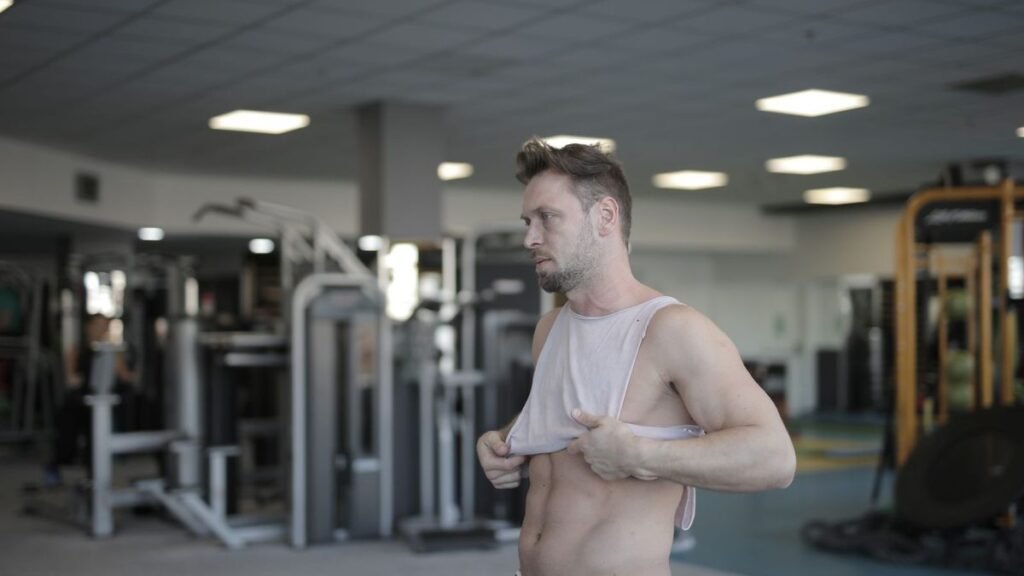
Fifteen percent body fat is the number a lot of men aim for, because it is where the stomach goes flat and the upper abs start to show without having to live on chicken and rice. It is also a number that gets quoted with far more confidence than most people can actually measure. This guide shows what 15 percent looks like on men and women, how it compares with 10 and 20 percent, where it sits on the health charts, how to estimate your own number without a lab, and what it realistically takes to get there and stay there.
Key takeaways
- For men, 15 percent body fat is lean and athletic: a flat stomach, visible upper abs in decent light, muscle definition in the arms and shoulders, and a waist that is clearly narrower than the chest.
- For women, 15 percent is very lean, at the bottom of the athlete range. Most women look toned and defined at 20 to 24 percent, and dropping below about 16 percent can affect periods and hormones.
- Ten percent for men means a full six-pack and visible veins. Twenty percent means a soft but healthy build with no visible abs.
- Home scales and visual guesses are usually off by 3 to 5 points. A DEXA scan is the only way to know within 1 to 2 points.
- Getting from 20 to 15 percent takes most men about 10 to 12 weeks of a modest calorie deficit, enough protein, and strength training.
What 15 percent body fat looks like
Men at 15 percent
At 15 percent a man looks fit in clothes and lean without a shirt. The stomach is flat, the top two or four abdominal muscles show when standing in good light, and the lower abs are usually still covered by a thin layer. There is a visible line down the center of the stomach and some shape to the obliques at the sides. Shoulders, arms, and chest show muscle separation if there is muscle to show. Veins may be faintly visible on the forearms and biceps but not across the stomach. The face is defined with a clear jawline. This is roughly where many professional athletes in team sports sit in season, and it is the point most men describe as “beach ready.”
Women at 15 percent
The same number means something very different for women, because women carry more essential fat by design: in the breasts, hips, and thighs, and around reproductive organs. At 15 percent a woman has a fully visible six-pack, sharp muscle separation in the arms, shoulders, and legs, visible veins, and very little curve at the hips. It is the look of a fitness competitor on stage or an elite distance runner. It is not a look most women can hold year-round, and for many it comes with missed periods, fatigue, and poor recovery. Women who want a “toned” look with visible definition in the arms and a flat stomach usually get it at 20 to 24 percent.
How 15 percent compares with 10 and 20 percent
| Body fat, men | What you see | How it feels |
|---|---|---|
| 10 percent | Full six-pack including lower abs, veins across the stomach and arms, visible serratus muscles under the chest, very sharp face | Hungry often, cold easily, sleep and mood can suffer, hard to maintain without constant attention |
| 15 percent | Flat stomach, upper abs visible, defined arms and shoulders, no stomach veins | Comfortable for most men with a consistent routine; energy and strength normal |
| 20 percent | No visible abs, some softness around the waist and lower back, arms and chest look solid but not defined | Easy to maintain, healthy, the average for an active man |
| 25 percent and above | Noticeable belly, waist wider than the chest, little definition anywhere | Classed as obese by the American Council on Exercise; health risks rise from here |
| Body fat, women | What you see | How it feels |
|---|---|---|
| 15 percent | Visible six-pack, striated shoulders, veins, minimal hip curve | Competition-lean; periods often stop, recovery and mood suffer |
| 20 percent | Flat stomach with faint ab outline, defined arms and legs, athletic shape | Lean and sustainable for athletic women who train hard |
| 25 percent | Toned but soft, some curve, no visible abs, a healthy fit look | Comfortable and healthy; the typical “fit” range |
| 30 percent and above | Softer overall, curves fuller, little muscle definition | Average; health risks rise above about 32 percent |
The jump from 20 to 15 percent changes the stomach more than anything else. The jump from 15 to 10 changes the lower abs, the veins, and the face, and it costs far more effort for a result that mostly shows without a shirt.
Why 15 percent looks different on different people
Two people at exactly 15 percent can look surprisingly different, which is why photos online can mislead you. The main reasons:
- Muscle. More muscle under the same amount of fat looks leaner and more defined. A man who lifts will look harder at 15 percent than one who does not.
- Where you store fat. Genes decide whether fat sits mostly on the belly, the hips and thighs, or spreads evenly. Two people at 15 percent may still show abs in one case and not the other.
- Height and frame. The same fat spread over a taller or broader frame looks thinner.
- Age. With age, more fat is stored around the organs and skin is less firm, so the same percentage tends to look softer.
- How it was measured. A home scale and a DEXA scan can be 3 to 5 points apart, so two “15 percents” may not be the same number at all.
Is 15 percent body fat healthy?
For men, yes, comfortably. The American Council on Exercise classes 6 to 13 percent as the athlete range for men, 14 to 17 as fitness, 18 to 24 as average, and 25 and above as obese. Fifteen percent sits in the fitness band, well above the 2 to 5 percent of essential fat a male body needs to function and far from the point where health risks climb. Most men can hold 15 percent with normal energy, strength, and hormone levels. These ranges are for adults in general. Healthy body fat tends to run a few points higher with age, so a number that is average at 25 is relatively lean at 60.
For women, 15 percent sits in the athlete range, which ACE defines as 14 to 20 percent, with fitness at 21 to 24, average at 25 to 31, and obese at 32 and above. The essential fat a woman’s body needs is 10 to 13 percent, so 15 is close to the floor. Some women, especially those with a naturally lean build, hold it without trouble. Many others experience irregular or absent periods, low energy, poor sleep, hair thinning, and more frequent injuries, a pattern doctors call relative energy deficiency. If any of those appear while chasing a low number, the number is too low for you, whatever the chart says.
How to find out your body fat percentage
This is where honesty matters, because most of the numbers people quote are guesses dressed up as measurements.
- DEXA scan. The most accurate option available to the public, within about 1 to 2 points. Costs $50 to $150 at a clinic or university lab. Worth doing once if you want a true baseline.
- Bod Pod or hydrostatic weighing. Similar accuracy, less widely available.
- Smart scales and handheld devices. These send a small current through the body and estimate fat from resistance. They can be off by 3 to 5 points or more, and they swing with hydration, food, and time of day. Useful for trends if you weigh at the same time under the same conditions; useless as a single reading.
- Skinfold calipers. Accurate to about 3 points in trained hands, much worse in untrained ones.
- Tape measure methods. The US Navy formula uses neck, waist, and height, and for most people lands within 3 to 4 points. Free and repeatable.
- Visual comparison. Comparing yourself with photos is the least accurate method and the most common. People routinely guess 5 points too low.
The practical approach for most people is a tape measure or a consistent scale reading for the trend, and a DEXA scan once if you want to know where you truly started. If you have a tape measure handy, our calculator runs both the Navy and Army formulas and shows where your number sits on the charts. If you are tracking calories to get there, our TDEE calculator accepts a body fat percentage and uses it to sharpen your calorie estimate.
How to get to 15 percent body fat
Assume a 180-pound man at 20 percent. He carries 36 pounds of fat. To reach 15 percent at a similar muscle mass he needs to lose about 10 pounds of fat, which at a sensible pace of about a pound a week is 10 to 12 weeks. From 25 percent it is closer to 20 pounds and five months.
To work out your own target, multiply your weight by your body fat percentage to get your fat mass, subtract that from your weight to get your lean mass, then divide your lean mass by 0.85. For the same 180-pound man at 20 percent, lean mass is 144 pounds, and 144 divided by 0.85 is about 169 pounds, so roughly 11 pounds to lose if he keeps all his muscle.
The plan that gets there without losing muscle has four parts.
- A modest calorie deficit. Eat 300 to 500 calories below your maintenance level. Bigger deficits lose muscle along with fat, which flattens the look you are after. Recalculate every 10 pounds.
- Enough protein. Around 0.8 to 1 gram per pound of body weight each day during a cut. This is the single biggest factor in keeping muscle while losing fat.
- Strength training three or four times a week. Lifting tells the body to keep muscle. Cardio helps the deficit but does not protect muscle on its own.
- Sleep and patience. Seven to eight hours, and a realistic timeline. Fat loss is not linear, and the last 2 or 3 points take longer than the first 5.
If you want to burn more without living in the gym, our guide to how to burn 1000 calories a day covers the activities that move the needle most.
Staying at 15 percent
Holding 15 percent is easier than reaching it, provided you return to maintenance calories rather than staying in a deficit, keep lifting, and keep protein high. Weight will drift up a few pounds as glycogen and water return, and that is normal; it is not fat. Most men find a comfortable off-season between 15 and 18 percent, drop to 15 for summer or an event with a short, mild cut, and never need the harsh dieting that gets people to 10. Women in the 20 to 24 range follow the same pattern. The people who yo-yo are usually the ones who dieted too hard and then stopped tracking entirely.
When to talk to a doctor
See a doctor before starting a cut if you have diabetes, heart disease, a history of disordered eating, or if you are under 18. Stop and get advice if fat loss comes with missed periods, constant fatigue, dizziness, hair shedding, or a drop in strength that does not recover with a rest week. Those are signs of too large a deficit or a number that is too low for your body.
The bottom line
Fifteen percent body fat is lean, athletic, and healthy for men: a flat stomach, upper abs showing, defined arms, and a build that most men can maintain with a consistent routine. For women it is competition-lean and often too low to sustain, with 20 to 24 percent delivering the same toned look. Measure with a tape or a DEXA scan rather than a mirror, expect 10 to 12 weeks to drop from 20 to 15 at a sensible pace, and protect your muscle with protein and lifting so the number you reach actually looks the way you hoped.
Frequently asked questions
What does 15 percent body fat look like on a man?
A flat stomach, the upper abs visible in good light, a line down the center of the stomach, defined arms and shoulders, and a clear jawline. Veins may show faintly on the forearms but not across the stomach. It is the look most men describe as beach ready without being competition lean.
What does 15 percent body fat look like on a woman?
Very lean: a visible six-pack, sharp definition in the arms, shoulders, and legs, visible veins, and little curve at the hips. It is the look of a fitness competitor and is hard for most women to maintain without hormonal and energy problems. A toned, defined look is usually reached at 20 to 24 percent.
Is 15 percent body fat good?
For men it is a healthy fitness level, above essential fat and below any health risk, and sustainable for most. For women it is in the athlete range and close to the essential minimum, so it is good only if it comes without missed periods, fatigue, or poor recovery.
Can you see abs at 15 percent body fat?
Men usually see the upper abs at 15 percent, especially in good light, with the lower abs still covered. A full six-pack generally needs 10 to 12 percent. Women see faint ab outlines at around 20 percent and a full six-pack near 15.
How long does it take to get to 15 percent body fat?
From 20 percent, about 10 to 12 weeks for a 180-pound man losing a pound of fat a week. From 25 percent, closer to five months. Losing faster than about a pound a week usually costs muscle and makes the end result look softer.
What is the difference between 15 and 20 percent body fat?
About 10 pounds of fat for a 180-pound man, and mostly the stomach. At 20 percent there are no visible abs and some softness at the waist. At 15 the stomach is flat and the upper abs show. Strength, energy, and health are similar at both.
How accurate are body fat scales?
Not very. Smart scales estimate fat from electrical resistance and can be off by 3 to 5 points or more, swinging with hydration and time of day. They are useful for trends if you weigh under the same conditions each time. A DEXA scan is accurate to within 1 to 2 points.
What body fat percentage is healthy?
According to the American Council on Exercise, 14 to 17 percent is the fitness range for men and 21 to 24 for women, with 18 to 24 and 25 to 31 respectively classed as average. Health risks rise above about 25 percent for men and 32 percent for women.