Updated on October 29, 2026 · Our editorial process
 Medically reviewed by Dr. Thomas Burke, DO, Dermatology
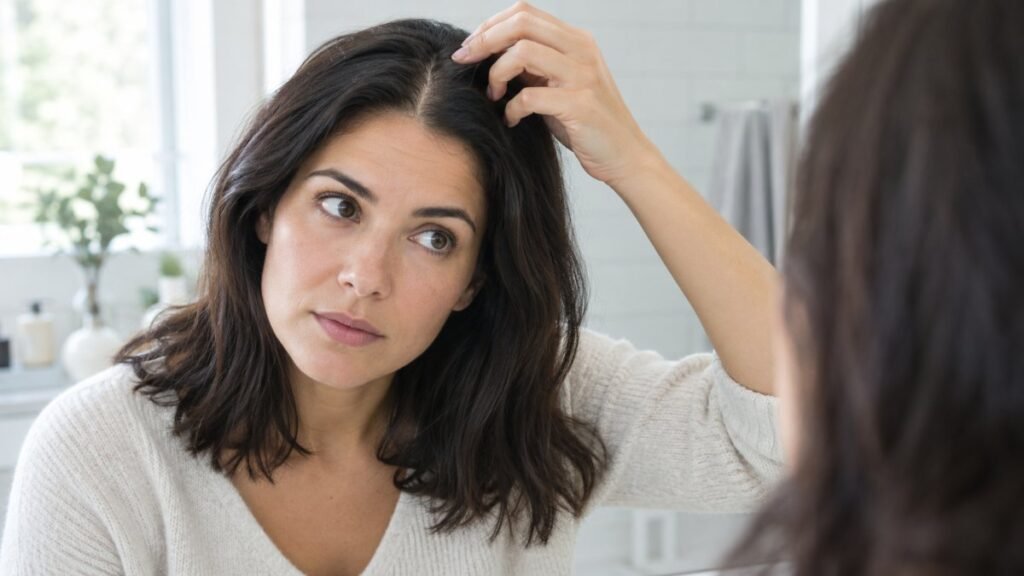
You brush your hair and a shower of flakes lands on your shoulders. Dandruff, you think, and you buy a medicated shampoo. Three weeks later the flakes are still there, the skin under them is sore, and now there is a raised, scaly patch creeping past your hairline onto your forehead. That second part is the clue. Dandruff stays on the scalp. Scalp psoriasis does not have to.
Scalp psoriasis is one of the most common forms of psoriasis, a lifelong immune condition that makes skin cells grow far too fast. It is also one of the most misread, because in its mild form it looks almost exactly like dandruff. This guide explains what it looks like, what causes it, how to tell it from dandruff and seborrheic dermatitis, whether it causes hair loss, why picking makes it worse, and what treatment looks like from the drugstore shelf to a dermatologist’s office.
Key takeaways
- Scalp psoriasis causes raised, well-defined patches covered in silvery or powdery scale. It often spreads past the hairline onto the forehead, the back of the neck, and around the ears. Dandruff does not.
- It is an immune condition, not a hygiene problem and not contagious. Skin cells that should take about a month to grow and shed do it in three to four days and pile up as plaques.
- Hair loss from scalp psoriasis is usually temporary and grows back once the scalp clears. Most of the loss comes from scratching and picking, not the disease itself.
- Mild cases may respond to salicylic acid or coal tar products, but many people need prescription treatment. With a dermatologist’s plan, followed properly and with follow-up visits, it is unusual to struggle with scalp psoriasis for long.
What scalp psoriasis looks like
The classic picture is a plaque: a raised, thick patch of skin with a sharp edge and a dry, flaky surface. On lighter skin the patch looks red or pink under silvery white scale. On darker skin it tends to look purple, gray, or dark brown, and the scale can look more gray than white. Plaques can be a single coin-sized spot or they can cover the whole scalp like a cap.
Where it shows up matters as much as how it looks. According to the National Psoriasis Foundation, scalp psoriasis can affect the scalp itself, the hairline, the forehead, the back of the neck, and the skin around and behind the ears. That spread beyond the hair is one of the most useful signs that you are not dealing with ordinary dandruff.
Other common symptoms include:
- Itching, from mild to severe enough to wake you at night.
- Flaking that can be fine and dandruff-like, or thick and crusted.
- Soreness, burning, or a tight feeling across the affected skin. If pain is your main complaint, our guide to the reasons a scalp hurts covers the other causes too.
- Bleeding where scale has been picked or scratched off.
- Thinning hair over the plaques, which usually recovers.
Scalp psoriasis is common. The Foundation reports that somewhere between half and four in five people with psoriasis will have it on the scalp at some point, and the American Academy of Dermatology puts the figure for plaque psoriasis at about 50 percent. Dermatologists call the scalp a “high-impact site” because even a small patch there affects daily life far more than the same patch on a knee.
What causes scalp psoriasis
Psoriasis is an immune system problem that shows up on the skin. In healthy skin, a new cell forms deep in the epidermis, rises to the surface, and sheds in about a month. In psoriasis the immune system sends out inflammatory signals that speed this cycle up to three or four days. The cells arrive at the surface faster than the old ones can fall away, so they stack up into the thick, scaly plaques you can see and feel.
Why the immune system does this is not fully understood. The National Institute of Arthritis and Musculoskeletal and Skin Diseases describes it as a mix of genetics and environment. Psoriasis runs in families, affects men and women equally, and is more common in adults than in children. It is not caused by poor hygiene, it is not an allergy, and you cannot catch it from or pass it to anyone else.
Scalp psoriasis is simply psoriasis that has settled on the scalp, so it shares the same triggers as plaques anywhere else. The Foundation lists the usual ones:
- Stress, which is both the most reported trigger and the hardest to control.
- Injury to the skin, including scratching, harsh brushing, tight hairstyles, and chemical treatments.
- Infections, especially strep throat, and conditions that weaken the immune system, such as HIV.
- Certain medications, such as lithium, some blood pressure drugs, and antimalarials.
- Smoking and heavy alcohol use.
- Cold, dry weather.
- Carrying extra weight, diabetes, and metabolic syndrome, which make psoriasis more likely and harder to control. Keeping a healthy weight helps.
One more link is worth knowing. Roughly one in three people with psoriasis go on to develop psoriatic arthritis, and scalp involvement is associated with a higher risk. If you have scalp psoriasis plus stiff, swollen, or painful joints, especially in the morning, tell your doctor. Catching psoriatic arthritis early protects the joints.
Scalp psoriasis vs. dandruff: how to tell the difference
This is the question most people are really asking, and it is a fair one, because mild scalp psoriasis and dandruff can look identical from across a room. Dandruff is the everyday name for mild seborrheic dermatitis, an oily, flaky condition driven by a yeast called Malassezia that lives on everyone’s skin. Psoriasis is an immune disease. The flakes may look similar, but the skin underneath behaves differently.
| Sign | Dandruff (seborrheic dermatitis) | Scalp psoriasis |
|---|---|---|
| Flakes | Small, white or yellowish, often greasy | Dry, powdery or thick, silvery white or gray |
| Skin underneath | Mildly pink, oily, not raised | Raised, thick plaque with a sharp, well-defined edge |
| Where | Stays on the scalp and other oily areas such as eyebrows, sides of the nose, and chest | Scalp, and often past the hairline onto the forehead, neck, and behind the ears |
| Elsewhere on the body | Oily zones of the face and chest | Elbows, knees, lower back; nails may be pitted or thickened |
| Itch | Mild to moderate | Often more intense, and the skin may burn or feel sore |
| Bleeding when flakes come off | Rare | Common, in tiny pinpoint dots |
| Response to dandruff shampoo | Usually improves within a few weeks | Little or no change |
| Course | Comes and goes, often worse in winter | Persistent, with flares and remissions over years |
The Foundation sums up the visual difference neatly: psoriasis scale looks powdery with a silvery sheen, while seborrheic dermatitis looks yellowish and greasy. Two practical tests help at home. First, look past the hairline. A patch on the forehead, behind the ear, or on the nape points to psoriasis. Second, check the rest of your body. Scaly elbows or knees, or small dents in your fingernails, make psoriasis far more likely than dandruff.
Some people have both at once, a picture dermatologists sometimes call sebopsoriasis. And a dry, tight, flaky scalp with fine white flakes and no redness may be neither; it may just be dry skin. If an over-the-counter dandruff shampoo has not helped after four to six weeks, or any patch is thick, raised, or spreading, see a dermatologist. Most of the time they can tell by looking. Occasionally a small skin biopsy settles it.
Does scalp psoriasis cause hair loss?
It can, but the news here is better than most people expect. Hair loss from scalp psoriasis is almost always temporary. The Academy’s guidance on scalp psoriasis and hair loss is clear that hair tends to regrow once the scalp psoriasis clears, which is why treating the plaques is the first step in treating the hair.
Several things combine to thin the hair over a plaque:
- Scratching and picking. This is the biggest cause. Pulling off thick scale pulls hair out with it, and repeated scratching damages the follicles beneath.
- Inflammation. Severe, long-standing plaques can push follicles into a resting phase, so hair sheds a few months later.
- Dry, brittle hair. Medicated shampoos, alcohol-based scalp solutions, and blow drying all dry the hair shaft, which then snaps.
- Stress. A bad flare is stressful, and stress itself can trigger a round of shedding.
Permanent, scarring hair loss from scalp psoriasis is rare and is linked to very severe disease left untreated for a long time. If your hair is thinning and your scalp is clear, or the thinning follows a pattern such as a widening part or a receding hairline, something else is probably going on. We cover the common causes in our guides to thinning hair in women and male pattern baldness.
Can picking scalp psoriasis make it worse?
Yes, and in two separate ways. The first is mechanical: picking lifts hair out along with the scale and leaves raw, bleeding skin that is open to infection. The second is a quirk of psoriasis called the Koebner phenomenon. Psoriasis tends to form new plaques wherever the skin is injured, so a scratch, a picked patch, or an aggressive brushing session can seed fresh plaques in skin that was clear. The Foundation notes that controlling itch is important for exactly this reason, and the Academy’s self-care tips put “try not to scratch” at the top of the list.
That is easier said than done when a scalp is burning with itch, so the practical advice is to make picking harder and less necessary:
- Soften scale with a salicylic acid product or an oil treatment before washing, so it comes away in the shower instead of under your fingernails.
- Keep nails short and filed smooth.
- Use a soft brush, and comb scale away gently rather than scraping.
- Treat the itch by treating the psoriasis. If the itch is unbearable while you wait, say so. Dermatologists have options for that specifically.
- Keep the scalp clean, because cracked or picked plaques can get infected. If an area becomes more red, painful, or warm, or starts to weep pus, see a doctor promptly.
Scalp psoriasis treatment
There is no cure for psoriasis, but scalp psoriasis is very treatable, and the range of options has grown a lot in the past decade. Treatment usually moves in steps, from products you can buy without a prescription to medicines a dermatologist prescribes, and most plans combine two or three of them.
Over-the-counter products
For mild scalp psoriasis, the Foundation points to two active ingredients worth looking for on a label:
- Salicylic acid softens and lifts scale so it washes away and so other treatments can reach the skin. It comes in shampoos, scalp oils, and leave-on solutions. More is not better: used too often or too strong, salicylic acid can leave the scalp dry, red, and irritated, which feeds the itch-scratch cycle.
- Coal tar slows skin cell growth and eases itching and scaling. Tar shampoos are inexpensive and have been used for decades. They smell like tar, can stain light hair, and can make the scalp more sensitive to sun, so rinse well and wear a hat.
Shampoos with zinc pyrithione or ketoconazole, the standard dandruff ingredients, target the yeast behind seborrheic dermatitis. They can help if you have both conditions, but on their own they rarely do much for true psoriasis plaques, and that lack of response is itself a useful diagnostic clue.
Prescription treatments applied to the scalp
According to the Academy, medicine applied directly to the scalp is the most commonly prescribed treatment, and a plan often uses different products morning and night. The main options are:
- Topical corticosteroids are the number one prescription for scalp psoriasis in children and adults. They cut redness, swelling, itch, and scale quickly. Because scalp skin is thick, dermatologists often use stronger steroids here than they would on the face, in foams, solutions, or shampoos that reach the skin through hair. Use them exactly as prescribed and only for as long as prescribed: a strong steroid used for too long can thin the skin and, in some people, thin the hair over the treated area, so it belongs under a doctor’s guidance, with any side effect reported early.
- Clobetasol propionate shampoo is a strong steroid in shampoo form for stubborn cases. Studies show it can be used daily for up to four weeks, then once or twice a week to hold the result.
- Calcipotriene, a synthetic form of vitamin D, is usually applied at night. On its own it can irritate the scalp, which is one reason it is often paired with a steroid; the combination irritates less and clears faster than either alone.
- Tazarotene, a vitamin A derivative, is applied as a thin layer before bed and washed off in the morning. Tazarotene and the oral retinoid acitretin can cause serious birth defects, so anyone who could become pregnant needs reliable contraception while using them and should talk this through with their doctor first.
- Prescription-strength coal tar is used less than it once was but still helps with itch.
Getting these products onto the scalp, and not just onto the hair, is half the battle. Part your hair in sections, lift it out of the way, and apply along the parts. Thick plaques may need a scale softener first so the medicine can penetrate.
Treatments at the dermatologist’s office
- Steroid injections directly into a few stubborn plaques, used sparingly.
- Light therapy. Ultraviolet B slows skin cell growth. Because hair blocks light, clinics use handheld comb devices or an excimer laser that targets only the affected patches. Sessions are short, usually two or three times a week for several weeks.
Systemic medicines
If scalp psoriasis is extensive, stubborn, or comes with psoriatic arthritis, a dermatologist may prescribe medicine that works on the immune system from the inside. Options include methotrexate, cyclosporine, oral retinoids, apremilast, and the biologics, which are injectable antibodies that block specific inflammatory signals. These medicines lower the body’s immune defenses and can affect the liver, kidneys, or blood counts, so they need regular blood tests and a specialist’s supervision, and methotrexate must not be used during pregnancy. For the right person, with that oversight, they can clear the scalp almost completely.
Caring for your hair while you treat your scalp
Medicated treatments and a sore scalp both take a toll on hair. These habits, drawn from the Academy’s hair-loss advice, limit the damage:
- Alternate shampoos. Use the medicated shampoo one wash and a gentle, unmedicated one the next, so your scalp and hair do not dry out.
- Condition after every wash. It eases dryness and covers the tar smell.
- Let hair air dry. Blow dryers dry out skin that is already parched.
- Test products before you commit. Dab a little hair dye, relaxer, or spray on a spot of scalp and wait a few hours. Irritation means find something gentler.
- Skip tight braids, rollers, and hot tools while you flare. Pulling and heat add skin injury on top of inflammation.
- Put off perms, dyes, and relaxers until the flare settles. The chemicals irritate inflamed skin and can set off new plaques through the Koebner effect.
- Moisturize the scalp between washes with a light scalp oil or a fragrance-free moisturizer, and avoid any product you know irritates you.
- Tell your dermatologist if treatment feels harsh. There is almost always a gentler option or a different schedule.
When to see a dermatologist
Book an appointment if any of the following apply:
- Flaking has not improved after four to six weeks of a dandruff or salicylic acid shampoo.
- Patches are thick, raised, bleeding, or spreading past the hairline.
- You are losing noticeable amounts of hair.
- Itch is interfering with sleep or work.
- You have scaly patches elsewhere, nail pitting, or stiff, swollen, or painful joints.
- You also have unexplained weight gain, high blood sugar, or persistent low mood. Psoriasis often travels with metabolic syndrome, psoriatic arthritis, and depression, and a dermatologist or primary care doctor will check for them.
- You are not sure what you have. Guessing wrong costs months of the wrong shampoo.
The bottom line
Scalp psoriasis is an immune condition that produces thick, silvery, sharply bordered plaques, often beyond the hairline, and it does not answer to dandruff shampoo. It is not contagious and not your fault. Hair loss over the plaques is usually temporary, and most of it comes from scratching and picking, so softening scale beats scraping it. Mild cases may settle with salicylic acid or coal tar, but many people need a prescription, and a dermatologist has a long list of effective options. With a plan you actually follow, and follow-up visits so it can be adjusted, it is unusual to struggle with scalp psoriasis for long.
Frequently asked questions
What does scalp psoriasis look like?
Raised, thick patches with a clear edge, covered in dry, silvery white or gray scale. On lighter skin the patch underneath looks red or pink; on darker skin it tends to look purple or dark brown. Patches can be small spots or cover the whole scalp, and they often extend onto the forehead, the back of the neck, and behind the ears.
How can I tell scalp psoriasis from dandruff?
Dandruff flakes are small, greasy, and yellowish on skin that is not raised, and they stay on the scalp. Psoriasis scale is dry and silvery on thick, raised plaques with sharp edges, and it often crosses the hairline. Scaly elbows or knees, pitted nails, pinpoint bleeding when flakes come off, and no response to dandruff shampoo all point to psoriasis.
What causes scalp psoriasis?
An overactive immune system that speeds skin cell turnover from about a month to three or four days, so cells pile up as plaques. Genetics set the risk, and flares are triggered by stress, skin injury, infections such as strep throat, some medicines, smoking, alcohol, and cold dry weather. It is not caused by poor hygiene and is not contagious.
Does scalp psoriasis cause hair loss?
It can thin hair over the plaques, but the loss is almost always temporary and hair regrows once the scalp clears. Most of it comes from scratching and picking off scale rather than from the disease itself. Permanent scarring hair loss is rare and linked to severe, long-untreated psoriasis.
Can picking scalp psoriasis make it worse?
Yes. Picking pulls out hair, leaves bleeding skin open to infection, and can trigger new plaques through the Koebner phenomenon, where psoriasis forms wherever skin is injured. Soften scale with salicylic acid or oil and let it wash away instead of scraping it off.
What is the best shampoo for scalp psoriasis?
For mild cases, a shampoo with salicylic acid to lift scale or coal tar to slow cell growth and ease itch. For stubborn cases, dermatologists often prescribe a clobetasol propionate shampoo, which can be used daily for up to four weeks and then once or twice a week. Ordinary dandruff shampoos with zinc pyrithione or ketoconazole rarely clear true psoriasis.
Is scalp psoriasis contagious?
No. It is an immune condition, not an infection. You cannot catch it from someone else or pass it on through combs, hats, pillows, or contact.
How long does scalp psoriasis take to clear?
Longer than dandruff. Over-the-counter products need four to six weeks to judge. Prescription topicals often show improvement within two to four weeks, and light therapy or systemic medicine takes several weeks to months. Psoriasis is lifelong, so most people need a maintenance routine, such as a medicated shampoo once or twice a week, to keep it clear.