Updated on October 27, 2026 · Our editorial process
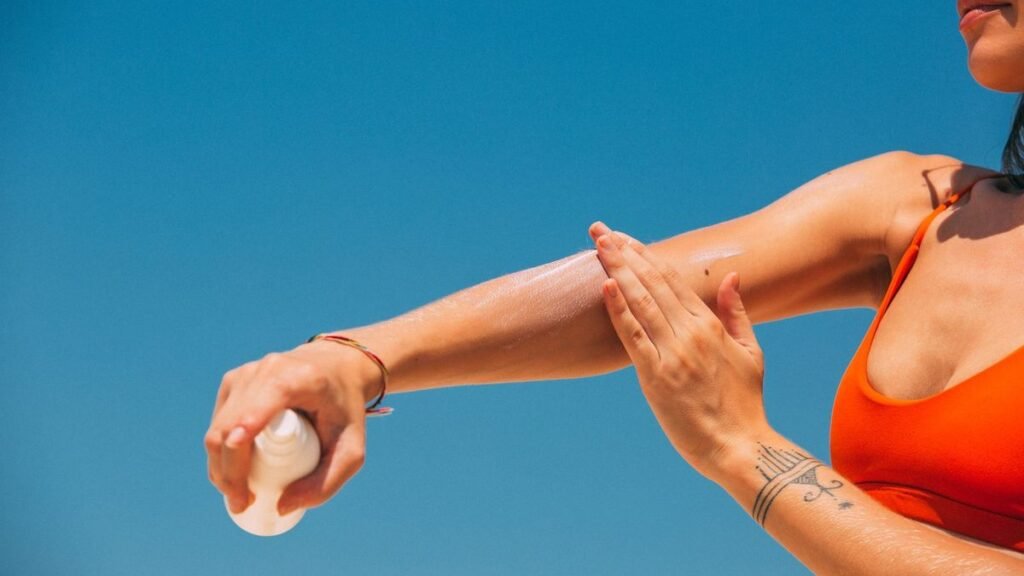
You put on SPF 50 at the beach, and by the end of the week you still have tan lines. So either the sunscreen is not working, or sunscreen does not stop tanning. The second one is true, and it surprises people, because the whole point of sunscreen seems to be keeping the sun off your skin. It does, mostly. The gap between “mostly” and “completely” is where the tan comes from, and understanding that gap tells you how to use sunscreen properly and what a tan actually is.
This guide explains why you can still tan with sunscreen on, what SPF numbers really block, whether tanning with sunscreen is safer, why there is no such thing as a healthy tan, and what to do if you want color without the damage.
Key takeaways
- Yes, you can tan with sunscreen on. SPF 30 blocks about 97 percent of UVB and SPF 50 about 98 percent, so some UV always reaches your skin, and most people apply far too little to get even that.
- A tan is your skin making extra pigment in response to DNA damage. Sunscreen slows that damage; it does not make it harmless.
- Sunscreen prevents sunburn far better than it prevents tanning, because the UVA rays that drive tanning are harder to block than the UVB rays that burn.
- There is no safe tan from the sun. A self-tanner gives the color with none of the damage.
Can you tan with sunscreen on?
You can, and with normal use you probably will. Sunscreen is a filter, not a wall. The American Academy of Dermatology explains that SPF 15 filters out about 93 percent of UVB rays, SPF 30 about 97 percent, and SPF 50 about 98 percent. No sunscreen blocks 100 percent. The 2 or 3 percent that gets through SPF 30 or 50 is enough, over an afternoon, to trigger the pigment response that shows up as a tan.
In practice the number that reaches your skin is much higher than 2 or 3 percent, for three reasons:
- Under-application. The SPF on the bottle is measured at 2 milligrams per square centimeter of skin, which works out to about an ounce, a full shot glass, for an adult body. Most people use a quarter to half that, and at half the dose SPF 30 behaves more like SPF 5 to 10.
- Wear-off. Sunscreen breaks down in sunlight and rubs off on towels, sand, and clothing. The FDA advises reapplying at least every two hours and after swimming or sweating, and few people do.
- Missed spots. Ears, the back of the neck, the part in your hair, tops of feet, and the strip along swimsuit edges tend to get less or none, which is why tan lines are sharpest there.
How your skin tone changes the picture
Fair skin makes less melanin, so it burns quickly and tans slowly or not at all. Medium and darker skin tans more easily and burns less, but it is not protected. It still burns with enough sun, still develops sun damage, dark spots, and wrinkles, and can still get skin cancer, which is often found later in people with darker skin. The American Academy of Dermatology recommends sunscreen for every skin tone.
What a tan actually is
A tan feels like a sign of health, and it is the opposite. Ultraviolet light penetrates the skin and damages the DNA in skin cells. In response, cells called melanocytes produce more melanin, the brown pigment, and push it up into the surrounding cells as a kind of shade for the next exposure. Darker skin is your body’s attempt to limit further damage that has already happened. The Academy’s position is blunt: every tan, like every burn, is evidence of skin injury, and it adds to the lifetime total that drives wrinkles, dark spots, loss of elasticity, and skin cancer.
Two kinds of UV are involved. UVB is the shorter wavelength that burns the surface of the skin and triggers the delayed tan that appears a day or two later. UVA is the longer wavelength that penetrates deeper, drives the immediate darkening you see during exposure, and is responsible for most of the aging and a share of the cancer risk. UVA is present all day, all year, and through window glass.
Why sunscreen stops burning better than it stops tanning
The SPF number only measures UVB protection, the burning rays. A “broad spectrum” label means the product also filters UVA, but the rules for that claim are a pass-or-fail test, not a percentage, and UVA protection in most sunscreens is lower than the UVB protection the SPF suggests. Since UVA drives a lot of tanning and gets through more easily, you can wear sunscreen, avoid a burn entirely, and still come home darker. That is not the sunscreen failing. It is doing the part it is best at.
Mineral sunscreens with zinc oxide tend to give the broadest and most stable UVA coverage, which is one reason dermatologists often recommend them for people who want to minimize tanning as well as burning.
Is tanning with sunscreen safer than tanning without?
Yes, meaningfully, and it is worth being clear about what that does and does not mean. With sunscreen properly applied, far less UV reaches your skin per hour, so the DNA damage per hour is far lower and the burn that signals severe damage is usually prevented. Studies following regular sunscreen users over years show fewer skin cancers and less visible aging than non-users.
What sunscreen does not do is make time in the sun free. People who wear sunscreen often stay out longer precisely because they do not burn, and a long day at reduced exposure can add up to as much damage as a short day at full exposure. Sunscreen is best thought of as a seat belt: it cuts the harm from what you were going to do anyway, not a license to do more of it. A tan obtained with sunscreen is still the result of damage, just slower.
Does sunscreen prevent tanning entirely?
No. You can slow tanning a great deal with SPF 30 or higher, a broad-spectrum formula, a full ounce applied 15 minutes before going out, reapplication every two hours, and shade in the middle of the day. Add a hat, sunglasses, and a long-sleeved shirt and you can go through a beach holiday with very little color change. But short of covering up completely, some exposure gets through, and skin that gets exposure makes pigment. If your goal is no tan at all, the answer is clothing and shade, with sunscreen for the skin you cannot cover.
The base tan myth
The idea that a light tan protects you from burning on vacation does not hold up. A tan provides roughly the protection of SPF 3 or 4, which is close to nothing, and the damage done to get that tan is real. Tanning beds, often sold as a way to build a base, deliver concentrated UVA and are classed as a cause of cancer by the World Health Organization. If you burn easily, the answer is more sunscreen and more shade on the trip, not pre-damage before it.
If you want color: the safe option
Self-tanners work by staining the outermost dead cells of the skin with a sugar-derived ingredient called DHA. They produce color in a few hours with no UV and no damage, fade over about a week as the skin naturally sheds, and modern formulas avoid the orange tone of older products. Exfoliate first, apply evenly with a mitt, and moisturize elbows, knees, and ankles so they do not grab extra color. A self-tanner gives no sun protection, so you still need sunscreen on top. If you already follow a natural skincare routine, this slots in after exfoliation and before sunscreen.
How to use sunscreen so it actually does its job
- Choose broad spectrum, SPF 30 or higher, water resistant for swimming or sweating.
- Apply a full ounce for the body and a nickel-sized amount for the face, 15 minutes before going out.
- Reapply every two hours, and right after swimming, sweating, or toweling off.
- Cover the spots everyone misses: ears, neck, the part in your hair, tops of feet, backs of hands, and along swimsuit edges. Use a lip balm with SPF.
- Check the bottle is in date and has not been cooking in a hot car. Our guide to whether sunscreen expires covers what to look for.
- Pair it with shade between 10 am and 4 pm, a wide-brimmed hat, and sunglasses. Sunscreen is one layer of protection, not the only one.
When to see a doctor
See a doctor for a sunburn with blisters over a large area, fever, chills, headache, or confusion, for any rash or swelling that appears after using a sunscreen, and for any mole or spot that is new, changing in size, shape, or color, has an irregular edge, or bleeds. People who tan regularly, have had blistering burns, have fair skin, or have a family history of skin cancer should have a skin check once a year.
The bottom line
You can tan with sunscreen on because no sunscreen blocks all UV, most people apply too little and reapply too late, and the UVA rays that drive tanning get through more easily than the UVB rays that burn. A tan is your skin’s reaction to damage, not a sign of health, and sunscreen slows that damage without removing it. Use SPF 30 or higher in the right amount, reapply on time, add shade and clothing, and if you want color, get it from a bottle of self-tanner rather than the sun.
Frequently asked questions
Can you tan with sunscreen on?
Yes. SPF 30 lets about 3 percent of UVB rays through and SPF 50 about 2 percent, and the UVA rays that drive tanning get through more easily still. Most people also apply far less than the amount the SPF rating assumes. That remaining exposure is enough to tan over an afternoon, even without burning.
Does sunscreen prevent tanning?
It slows tanning but does not stop it. Properly applied broad-spectrum SPF 30 or higher, reapplied every two hours, greatly reduces the UV reaching your skin, but some always gets through. Complete prevention takes clothing and shade, with sunscreen on the skin you cannot cover.
Do I need sunscreen if I already have a tan?
Yes. A tan is your skin’s response to UV damage, and it adds only very weak protection, roughly SPF 3 to 4. You can still burn, and the damage that leads to aging and skin cancer keeps adding up, so keep using a broad-spectrum SPF 30 or higher.
Can you still tan with SPF 50?
Yes. SPF 50 blocks about 98 percent of UVB under laboratory conditions, which still leaves 2 percent, and real-world application usually lets through more. You will tan more slowly than with no sunscreen or a lower SPF, and you are far less likely to burn.
Does wearing sunscreen cause low vitamin D?
It is unlikely. In real-world studies, people who use sunscreen regularly do not have meaningfully lower vitamin D levels, partly because no one applies enough to block all UVB. If you are worried about vitamin D, food and supplements are a safer source than unprotected sun, and a simple blood test can check your level.
Is tanning with sunscreen safe?
Safer than tanning without it, because far less UV reaches the skin per hour and burns are usually prevented. But any tan is the result of DNA damage, and sunscreen reduces that damage rather than eliminating it. There is no fully safe tan from the sun or a tanning bed.
Why do I still get tan lines with sunscreen?
Tan lines are sharpest where sunscreen was thin or missed: swimsuit edges, ears, neck, the hair part, tops of feet, and backs of hands. Sunscreen also wears off within two hours and faster in water, so the skin tans between applications.
Does a base tan protect you from burning?
Barely. A tan gives roughly the protection of SPF 3 or 4, and the damage done to acquire it is real. Tanning beds used to build a base deliver concentrated UVA and are classed as a cause of cancer. Sunscreen, shade, and clothing protect far better.
What SPF should I use if I want to tan slowly?
Dermatologists do not recommend any approach designed to tan, because tanning is skin damage. If you will be in the sun anyway, SPF 30 or higher, broad spectrum, applied in a full ounce and reapplied every two hours gives the best protection, and you will still develop some color over time.
How can I get a tan without sun damage?
Use a self-tanner. It stains the outer layer of dead skin cells with DHA, produces color within hours with no UV exposure, and fades over about a week. Exfoliate first, apply with a mitt, and wear sunscreen on top, since self-tanner provides no sun protection.